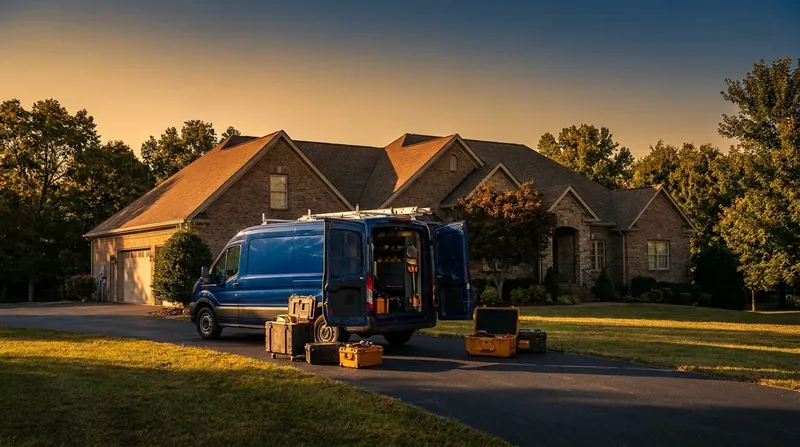
How to Start a Pest Control Business in Tennessee
How to Start a Pest Control Business in Tennessee
Starting a pest control business in Tennessee offers solid income potential, especially in growing cities like Nashville, Memphis, and Knoxville. But the regulatory landscape is strict: you'll need proper licensing, insurance, and business registration before you can legally operate. This guide walks you through each step.
Before You Start: What You Need to Know
Tennessee requires pest control businesses to be licensed by the state. Unlike some industries where you can operate as a sole proprietor with minimal paperwork, pest control has real compliance teeth. You cannot legally treat residential or commercial properties for pests without:
- A Tennessee pest control license (applicant or operator level)
- A legal business structure filed with the Secretary of State
- General liability and workers' compensation insurance
- Federal Employer Identification Number (EIN)
- State tax registration
Violating these requirements can result in fines and legal liability if a customer is harmed. This is not optional compliance; it's the cost of operating legally in this state.
Step 1: Choose Your Business Structure
Your first legal decision is how to structure your business. The three main options in Tennessee are sole proprietorship, LLC, and corporation. Most pest control operators choose an LLC because it offers liability protection (protecting your personal assets if a customer sues) while remaining simple to run and tax-efficient.
Sole Proprietorship
You operate under your own name with no formal filing. This costs nothing to start, but offers zero liability protection: if someone is injured or property is damaged, your personal savings and home are at risk. Not recommended for pest control work.
Limited Liability Company (LLC)
An LLC separates your business assets from your personal ones. If your business is sued, your house and personal savings are generally protected. Tennessee charges a $300 filing fee to form an LLC. You'll file Articles of Organization with the Tennessee Secretary of State at sos.tn.gov/businesses using their online portal, TNCaB.
You'll also owe annual reports: $300 per year, due by April 1st if you operate on a calendar year. Additionally, Tennessee imposes a franchise tax (0.25% of Tennessee net worth, minimum $100) and an excise tax (6.5% of Tennessee taxable income). These are modest costs compared to the liability protection.
Corporation
A corporation costs $100 to file and offers similar liability protection to an LLC, but involves more paperwork (board meetings, formal minutes, etc.). Most pest control operators don't need the added complexity; an LLC is usually the better choice.
Step 2: Reserve or Register Your Business Name
Before you file your LLC or corporation, verify that your chosen business name is available and doesn't confuse the public with an existing business. Tennessee's Secretary of State maintains a searchable database at tncab.tnsos.gov/portal/business-entity-search. Search your intended name to ensure it's not already taken.
If you find your exact name is taken but you still want to use it, you can apply for an "Application for Use of Indistinguishable Name" with a $20 fee, though approval is not guaranteed.
You can optionally reserve a name for four months (120 days) for $20 while you finalize your business plan. This prevents someone else from claiming it while you prepare. The reservation is not required, but gives you peace of mind if you're not filing your LLC immediately.
Step 3: Obtain Your Tennessee Pest Control License
This is the critical step that separates legal operators from illegal ones. Tennessee does not recognize a generic "pest control license" issued by the state through a single department; instead, regulation is handled through the Tennessee Department of Commerce and Insurance, Division of Regulatory Boards (structural pest control) and other agencies depending on what type of pest control you perform.
Important note: The specific licensing pathway and requirements depend on whether you focus on structural pest control (termites, wood-destroying insects), general pest control (cockroaches, ants, mosquitoes), or specialized services (pesticide application, fumigation). Each category has different exam requirements and experience prerequisites.
You should confirm current licensing requirements directly with the Tennessee Department of Commerce and Insurance before investing time and money in training, as requirements change. Their website is at tn.gov/commerce.
Generally, the pathway involves:
- Completing a certified pest control training course (4 to 8 weeks, varies by focus)
- Gaining documented field experience under a licensed operator (often 6 months to 1 year)
- Passing a state licensing exam covering pest identification, treatment methods, safety, and legal requirements
- Applying for your license with proof of training, experience, and passing exam scores
If you are starting the business but do not yet have your own pest control license, you can operate under an existing license held by another licensed individual (often called a "qualifying agent" or similar). This person supervises your work until you obtain your own license. This arrangement is temporary; don't plan to operate this way long-term.
Step 4: File Your LLC or Corporation with the Secretary of State
Once your business name is clear and you have your pest control license in hand (or a qualifying agent lined up), file your legal business structure. Use Tennessee's online filing portal, TNCaB, at tncab.tnsos.gov/portal.
For an LLC: File your Articles of Organization (Form SS-4270). You'll need:
- Your chosen business name (already verified as available)
- The address of your principal office in Tennessee
- A registered agent name and Tennessee street address (a real address, not a PO box)
- Your EIN (if you don't have one yet, apply with the IRS first)
- The $300 filing fee
The registered agent is a person or company designated to receive legal papers on behalf of your business. This can be you, a business partner, or a professional registered agent service (which costs $50 to $150 per year). Many new operators choose themselves to save money. Tennessee requires your registered office to be a valid street address that can be verified; a PO box will cause your filing to be rejected.
For a corporation: File your Charter (Form SS-4417) with the $100 fee and similar information.
Once filed, you'll receive a confirmation. This is your proof that the business legally exists. Keep this document.
Step 5: Obtain an EIN and Register for State Taxes
An EIN (Employer Identification Number) is a nine-digit identifier issued by the IRS, similar to a Social Security number for your business. You need one to:
- Open a business bank account
- Hire employees
- File business tax returns
Even if you start as a solo operator, get an EIN: it's free, takes 10 minutes online at irs.gov, and establishes clear separation between personal and business finances (important for liability protection).
Once you have your EIN, register with the Tennessee Department of Revenue for sales tax at tn.gov/revenue/taxes/sales-and-use-tax/registration.html. This is required if you expect to make sales in Tennessee. Pest control services are typically subject to Tennessee's 7% sales tax, though some service-only work may qualify for exemptions, confirm with the Department of Revenue.
Tennessee has no personal or corporate income tax, but does charge LLCs and corporations a franchise tax (0.25% of net worth, minimum $100 per year) and an excise tax (6.5% of taxable income). You'll file these with your annual report.
Step 6: Secure Insurance
Before you treat your first customer, obtain general liability insurance and workers' compensation insurance (if you hire employees). These are not optional; they're legally required and ethically essential.
General Liability Insurance covers bodily injury or property damage claims if your work harms a customer. A typical policy costs $600 to $1,500 per year for a small pest control operation and covers claims up to $1 to $2 million.
Workers' Compensation Insurance is required in Tennessee if you have any employees. It covers medical costs and lost wages if an employee is injured on the job. Rates vary by payroll, but expect $800 to $2,000 per year for a single employee.
Some insurance agents specialize in pest control; they understand the risks specific to your trade. Shop around, prices vary significantly.
Step 7: Obtain Local Business Licenses and Permits
Tennessee does not issue a single statewide business license. Instead, you'll register with your county and/or city. Requirements vary by location.
If your business has gross receipts over $3,000 but under $100,000 in a year, you typically need a minimal activity license from your county or municipal clerk. If receipts exceed $100,000, a standard business license is required. You must obtain and post the license before operating.
Contact your county clerk or municipal clerk to determine:
- The specific license type required for pest control in your area
- The fee (typically $15 to $50)
- The application process
Some municipalities also require additional permits for pesticide application or outdoor work. Confirm before you start.
Step 8: Invest in Equipment and Supplies
Once your licenses and insurance are in place, you're ready to buy what you need to do the work. Typical startup equipment includes:
- Personal protective equipment (PPE): respirator, gloves, eye protection, coveralls
- Application equipment: handheld sprayers, bait stations, dusters, aerosol dispensers
- Diagnostic tools: moisture meter, UV detection, inspection mirrors
- Vehicle: truck or van (used is fine for starting)
- Pesticides and baits: EPA-approved products appropriate to your licensing tier
- Ladders, hand tools, and safety equipment
Budget $3,000 to $8,000 for basic equipment if you're starting small. A used truck, if needed, can add $10,000 to $20,000 or more.
Step 9: Set Up Your Business Operations
Before your first customer call, establish:
- Business bank account: Separate your business money from personal funds. Bring your EIN letter and Secretary of State filing confirmation to your bank.
- Bookkeeping system: Track income and expenses for tax time. Simple spreadsheets work for starting out; accounting software like QuickBooks scales as you grow.
- Customer contracts: Use written contracts that outline your services, pricing, warranty terms, and liability limits. Consult a Tennessee business attorney for templates appropriate to pest control.
- Service records: Document every treatment you perform, including date, location, pest type, product used, and customer feedback. These are critical if a dispute arises.
- Marketing: Build a website, claim your Google Business profile, and ask early customers for reviews. Word-of-mouth and local search are your main channels.
Step 10: Monitor Licensing and Compliance Renewals
Pest control licenses typically require renewal every 1 to 2 years (confirm with the Department of Commerce and Insurance for your specific license type). Mark your calendar and budget for continuing education courses, which are often required. Missing a renewal deadline can result in fines or loss of license.
Similarly, your LLC's annual report is due by April 1st each year: $300 fee. File it on time to avoid penalties.
Tips for Success
- Specialize early: Don't try to handle termites, mosquitoes, and commercial fumigation all at once. Pick one focus area (e.g., residential pest control) and master it before expanding.
- Build relationships with contractors and landlords: These are consistent sources of business. Offer them volume discounts and reliable service.
- Invest in customer service: Pest control is a trust business. Prompt callbacks, transparent pricing, and follow-up inspections turn one-time customers into repeat clients.
- Stay current on products and regulations: Pesticide rules change. Subscribe to industry newsletters and attend training updates.
- Protect your reputation online: Encourage satisfied customers to leave reviews. Respond professionally to negative reviews; don't argue or dismiss feedback.
Common Mistakes to Avoid
- Operating without a pest control license: This is illegal and exposes you to fines and civil liability. Many customers ask to see your license; not having one will end the sale immediately.
- Skipping insurance: One liability claim can bankrupt an uninsured business. Insurance is cheap compared to the risk.
- Not separating personal and business finances: Use a business bank account and EIN. Commingling funds undermines liability protection and makes tax time a nightmare.
- Ignoring customer contracts: A verbal agreement means nothing if the customer disputes what you agreed to do. Always put it in writing.
- Underpricing: New operators often charge too little to win customers. This erodes margins and makes it hard to raise prices later. Research what established operators charge and price accordingly.
- Missing renewal deadlines: Losing your license or LLC status mid-year is catastrophic. Use a calendar or business management app to track all renewal dates.
Expected Results and Timeline
If you follow these steps systematically, you may reasonably expect to be operating legally within 3 to 6 months, depending on how quickly you complete your pest control training and pass the licensing exam. Some operators move faster if they've already completed certification courses; others take longer if they need to gain field experience under an existing licensee first.
Your first year is typically break-even or modest profit: customer acquisition is slow, equipment costs are high, and you're still building your reputation. Many operators reinvest profits back into equipment and marketing during year two, with profitability climbing in years three and beyond as referrals and repeat business grow.
Average pest control technicians in Tennessee earn $35,000 to $50,000 per year as employees; business owners often earn $60,000 to $100,000+ depending on the number of service routes and customer density, though this varies significantly based on location and specialization.
Disclaimer
This article is informational and does not constitute legal or tax advice. Pest control regulation in Tennessee is detailed and specific to your business type and service area. Before you invest time and money, consult the Tennessee Department of Commerce and Insurance to confirm current licensing requirements for your intended services. If you have questions about business structure, tax obligations, or liability, consult a Tennessee business attorney or CPA. This content is current as of 2026; regulations may change.
Keep exploring: related Tennessee guides
- How to Start a Lawn Care Business in Tennessee
- How to Start a Cleaning Business in Tennessee
- How to Start a Landscaping Business in Tennessee
- How to Start a Junk Removal Business in Tennessee
- How to Get a Contractor License in Tennessee
- How to Start an LLC in Tennessee
- Tennessee Business License
- How Much Does It Cost to Start a Business in Tennessee
- All Tennessee business types
- Every Tennessee guide in one place