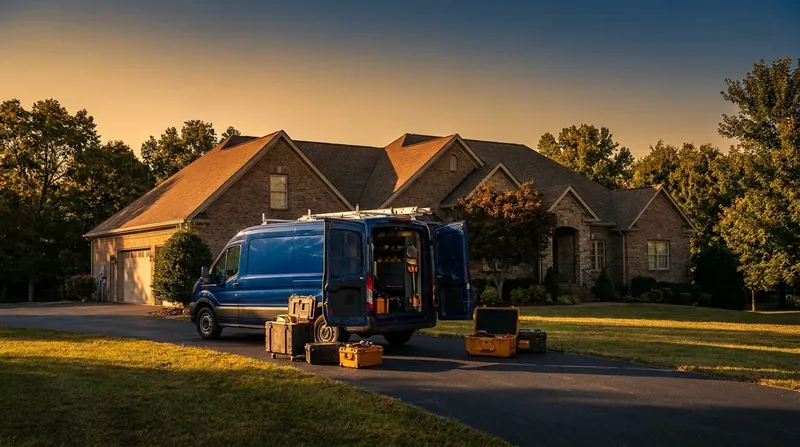
How to Start a Cleaning Business in Tennessee
How to Start a Cleaning Business in Tennessee
Starting a cleaning business in Tennessee is straightforward and requires less startup capital than many other ventures. Tennessee offers real advantages for cleaning business owners, including no state income tax, which directly boosts your take-home profits. Whether you're planning residential house cleaning, commercial office cleaning, or specialized services like carpet or post-construction cleaning, the basic requirements are the same: a solid business structure, proper licensing, insurance, and equipment.
Step 1: Plan Your Cleaning Business and Understand Your Market
Before filing any paperwork, spend time defining your cleaning business. Decide whether you'll focus on residential homes, commercial offices, or both. Research your local market in your Tennessee city or county, understanding competitors' pricing, the demand for services, and whether you'll specialize (carpet cleaning, move-out cleaning, window washing, etc.).
Create a basic business plan that covers your startup costs (supplies, equipment, insurance), pricing strategy, and marketing approach. Write down your business name ideas and verify availability through the Tennessee Secretary of State business search.
Common mistake: Many new cleaning business owners skip the planning phase and start with equipment before understanding their market. You cannot get a customer for a service nobody in your area needs.
Step 2: Choose Your Business Structure
You have three choices in Tennessee: operating as a sole proprietor, forming an LLC, or incorporating as a corporation. Each carries different legal protections and filing costs.
Sole Proprietorship
This is the simplest option and requires no formal filing with the Secretary of State. You operate under your personal name, and your personal assets are exposed to business liability. If a client is injured at their home and sues, they can go after your personal savings and property. For a cleaning business, this is risky. Filing cost: $0 with the Secretary of State (though you still need a local business license).
Limited Liability Company (LLC)
An LLC separates your personal assets from business liability, so lawsuits typically cannot touch your personal savings or home. This is the most popular choice for cleaning businesses because it provides liability protection at a reasonable cost. You file Articles of Organization with the Tennessee Secretary of State through their online portal, TNCaB, at https://tncab.tnsos.gov/portal. Filing fee: $300 (one-time). You must file an annual report by April 1 each year for $300.
Tennessee also requires LLCs to pay franchise tax (0.25% of your Tennessee net worth, with a $100 minimum) and excise tax (6.5% of Tennessee taxable income). These are state-level taxes in addition to federal income tax, so budget accordingly when pricing your services.
Corporation
Incorporating offers liability protection similar to an LLC but involves more administrative overhead and costs. Filing fee: $100, with annual reports due for $20. Corporations also pay the same franchise and excise taxes as LLCs in Tennessee. Most cleaning business owners choose an LLC because the paperwork is lighter.
Recommendation: Form an LLC. The $300 filing fee is money well spent to protect your personal assets. A single injury claim at a customer's home could bankrupt you as a sole proprietor.
Step 3: Register Your Business Name and DBA
If you're forming an LLC, you file your business name as part of the Articles of Organization. The name must contain "Limited Liability Company," "LLC," or "L.L.C." and must be distinguishable from existing names on file.
If you operate as a sole proprietor or corporation under a name other than your own, you must file an Application for Registration of Assumed Name (Form SS-4402) with the Tennessee Secretary of State. Filing fee: $20.
Check name availability free at the Tennessee Secretary of State business search at https://tncab.tnsos.gov/portal/business-entity-search before filing.
Tip: Choose a name that tells customers exactly what you do. "Fresh Clean Homes" is clearer than "Smith Enterprises." Your name is free marketing.
Step 4: Obtain an Employer Identification Number (EIN)
You need an EIN from the IRS even if you have no employees. It's your business's tax identification number. Apply free at www.irs.gov using Form SS-4. The IRS typically issues your EIN immediately online, or you can mail the form and receive one within four weeks. This takes 15 minutes and costs nothing.
Step 5: Get a Sales Tax Permit
Tennessee collects 7% sales tax on most cleaning services. If you charge customers directly for cleaning work, you must register for a sales tax permit through the Tennessee Department of Revenue at https://www.tn.gov/revenue/taxes/sales-and-use-tax/registration.html. Registration is free and takes about 10 minutes online. The state will issue your permit and explain when sales tax returns are due (typically monthly or quarterly, depending on your volume).
Important: Failure to collect and remit sales tax can result in penalties. Some cleaning businesses overlook this because they think they're "small," but Tennessee tracks all registered businesses.
Step 6: Obtain Local Business Licenses and Permits
Tennessee has no single statewide business license. Instead, you must obtain a business license from your county and/or city clerk. Most Tennessee counties and cities require a $15 business license registration fee per location. If you're operating in more than one city or county, you may need multiple licenses.
Contact your local county clerk or city business license office (phone numbers are available on your city or county website). Many now offer online registration.
For a gross revenue business like cleaning, the process is simple: you provide your EIN, business name, and address, pay $15, and receive your license within days. Post this license visibly in your office or vehicle.
Tip: Some Tennessee cities require background checks or health department clearance for cleaning businesses, especially if you'll be entering residential homes. Ask your local clerk upfront so you're not surprised later.
Step 7: Obtain Liability Insurance
This is non-negotiable. A single water damage claim, accidental breakage, or injury at a customer's home could exceed $50,000. Commercial general liability insurance for a cleaning business typically costs $400 to $800 per year depending on your coverage limits and the size of your operation. Most commercial clients will not hire you without proof of insurance.
Contact insurance brokers in your area and request quotes for commercial general liability and, if you'll hire employees, workers' compensation insurance (required by Tennessee law for any employee). Keep your insurance certificate and renewal dates organized.
Step 8: Purchase Equipment and Supplies
Your equipment needs depend on your cleaning focus, but most residential and commercial cleaning businesses require the following supplies and equipment:
Essential Equipment
- Vacuum cleaner (upright or backpack: $400 to $1,500)
- Mop and bucket system (basic: $50 to $200)
- Microfiber cloths and mop heads (reusable: $100 to $300 initial stock)
- Broom, dustpan, and brushes ($100)
- Squeegees and window cleaning tools ($100)
- Ladder ($150 to $400)
- Caddy or cart to transport supplies ($100 to $300)
- Carpet cleaning machine (optional but recommended: $1,000 to $3,000)
- Pressure washer (optional for exterior work: $300 to $1,500)
Cleaning Supplies
- Multipurpose cleaner (concentrate: $20 to $50 per gallon)
- Glass cleaner ($15 to $40 per gallon)
- Disinfectant ($20 to $60 per gallon)
- Bathroom cleaner and scrub brush ($30 to $80)
- Floor cleaner suitable for tile, wood, or carpet ($30 to $100)
- Degreaser ($20 to $50)
- Trash bags and liners ($30 per month)
- Gloves, masks, and PPE ($50 to $150)
Tip: Start with concentrate cleaners, not pre-mixed bottles. They cost less per ounce and reduce your chemical disposal footprint. A $50 gallon of concentrate makes 10 to 15 gallons of ready-to-use cleaner.
Expected startup cost for equipment and initial supply stock: $2,000 to $5,000 depending on whether you purchase a carpet cleaner or pressure washer. Without specialized equipment, budget $1,500 to $2,500.
Step 9: Set Up Accounting and Record-Keeping
Keep your business and personal finances completely separate from day one. Open a separate business bank account using your EIN. All customer payments go into this account, and all business expenses (supplies, gas, insurance, etc.) come from it.
Use simple accounting software like Wave (free), QuickBooks Self-Employed ($180 per year), or FreshBooks ($15 to $45 per month) to track income and expenses. Tennessee requires you to file annual reports and pay franchise and excise taxes based on your net income, so accurate records are essential. Keep receipts for all equipment and supply purchases.
Common mistake: Many cleaning business owners pay themselves in cash and mix personal and business money. This makes tax filing a nightmare and gives you no proof of income if you need a business loan later.
Step 10: Understand Your Tax Obligations
Tennessee has no personal income tax, which is a major advantage for cleaning business owners compared to neighboring states. However, you still owe federal income tax and Tennessee's corporate taxes:
Federal Income Tax
You owe federal income tax on your business profit. File Form 1040-SE (self-employment tax) annually if you operate as a sole proprietor or LLC treated as a sole proprietorship. If you form a formal LLC, you can elect to be taxed as a corporation or partnership (ask a CPA about the best option for your situation).
Tennessee Franchise and Excise Tax
Both LLCs and corporations must pay Tennessee's annual franchise tax (0.25% of Tennessee net worth, minimum $100) and excise tax (6.5% of Tennessee taxable income). These are due to the Tennessee Department of Revenue and are filed as part of your annual report. Sole proprietors don't owe franchise or excise tax; they only pay federal self-employment tax.
Sales Tax
Collect and remit 7% sales tax on all cleaning services. File returns monthly, quarterly, or annually depending on your volume (the state notifies you when you register).
Recommendation: Consult a CPA or tax professional when you're starting. The cost of an initial tax consultation ($200 to $500) can save you thousands in overpayment or underpayment penalties.
Step 11: Build Your Customer Base and Marketing
Once licensed and insured, start marketing your services. Create a simple website or Facebook page with your business name, phone number, and photo of your work. Ask early customers for reviews and referrals. In the cleaning business, word-of-mouth grows fast.
Set your pricing by researching local competitors and calculating your costs. Most Tennessee residential cleaning runs $100 to $250 per visit depending on square footage and location (Nashville and Knoxville typically command higher rates than rural areas).
Common Mistakes to Avoid
- Starting without insurance: One injury claim will wipe out months of profits.
- Skipping business registration: Operating without a license invites legal trouble and limits your ability to take on commercial clients.
- Mixing personal and business finances: You cannot prove your income to banks or the IRS, and you lose liability protection if the separation isn't clear.
- Undercutting prices to compete: New cleaning businesses often charge too little. Calculate your actual costs (labor, supplies, gas, insurance, taxes) before pricing.
- Ignoring sales tax: Tennessee tracks registered businesses. Failure to remit sales tax triggers audits and penalties.
- Not getting worker's compensation insurance: If you hire even one employee, you must carry workers' compensation insurance in Tennessee.
Expected Results and Timeline
You can register your business and obtain licenses within two to three weeks, often faster. Expect to spend $500 to $1,500 on registration, licensing, insurance, and initial supplies if you start as a sole proprietor, or $800 to $2,000 if you form an LLC.
Once licensed, you should be able to land your first clients within one to two weeks if you market actively. Most cleaning business owners report breaking even (covering all startup costs) within the first 60 to 90 days of operation if they maintain steady weekly bookings.
Resources and Next Steps
- Tennessee Secretary of State Business Registration: https://tncab.tnsos.gov/portal
- Business Entity Search (verify name availability): https://tncab.tnsos.gov/portal/business-entity-search
- Tennessee Department of Revenue (Sales Tax Registration): https://www.tn.gov/revenue/taxes/sales-and-use-tax/registration.html
- IRS EIN Application: https://www.irs.gov
- Tennessee Small Business Development Center (Free Consulting): https://www.tsbdc.org/
- SBA Tennessee District Office: https://www.sba.gov/district/tennessee
Legal and Tax Advice Disclaimer
This article provides informational guidance on starting a cleaning business in Tennessee and is not legal or tax advice. Business formation, tax obligations, and licensing requirements vary by location and individual circumstances. Consult a qualified attorney licensed in Tennessee for specific legal questions, and consult a CPA or tax professional before filing any forms or making structural decisions. The fees and requirements mentioned reflect information current as of October 2026 and are subject to change by the Tennessee Secretary of State and Department of Revenue.
Keep exploring: related Tennessee guides
- How to Start a Pest Control Business in Tennessee
- How to Start a Junk Removal Business in Tennessee
- How to Start a Lawn Care Business in Tennessee
- How to Start a Landscaping Business in Tennessee
- How to Get a Contractor License in Tennessee
- How to Start an LLC in Tennessee
- Tennessee Business License
- How Much Does It Cost to Start a Business in Tennessee
- All Tennessee business types
- Every Tennessee guide in one place