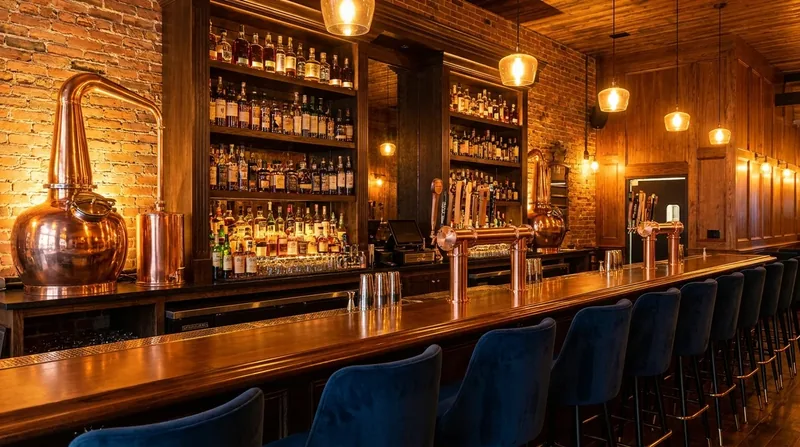
How to Start a Distillery in Tennessee
How to Start a Distillery in Tennessee
Starting a distillery in Tennessee is a complex undertaking that requires navigating federal alcohol regulations, state licensing, capital investment, and operational compliance. Tennessee has a growing spirits industry and offers some advantages for distillery businesses, but the path to opening requires patience, expertise, and professional guidance.
Overview: Why Tennessee for a Distillery
Tennessee has become increasingly attractive for craft distilleries in recent years. The state has no specific restrictions on distillery locations (unlike some states), and Nashville, Knoxville, and Memphis have emerged as hubs for craft spirits production. Tennessee's tourism industry, particularly in Nashville, creates a built-in market for distillery tours and tastings. However, the regulatory framework is strict and requires serious planning before you can produce a single bottle.
Before proceeding, understand this critical point: distillery operations are regulated by the federal Alcohol and Tobacco Tax and Trade Bureau (TTB) at the national level and by Tennessee state authorities locally. Both must approve your operation before you can legally produce spirits.
The Regulatory Landscape: Federal vs. State Authority
Unlike many business ventures, distillery licensing is not optional or one-step. The TTB (a division of the U.S. Department of Justice) issues federal Distilled Spirits Permits (DSPs). Tennessee's Department of Revenue and local county and municipal authorities issue state and local permits. You must obtain federal approval before Tennessee will grant state permits. This sequential process typically takes 6 to 18 months from application to first legal production.
The regulatory complexity is why consulting a distillery attorney and a CPA specializing in alcohol beverage taxation is strongly recommended, not optional. The costs are worth the protection against costly compliance mistakes.
Step-by-Step Process: From Concept to Production
Step 1: Form Your Business Entity
Before you apply for any distillery license, establish a legal business structure. Most distillery operators choose an LLC (Limited Liability Company) or a corporation. You will need to file Articles of Organization (for an LLC) or a Charter (for a corporation) with the Tennessee Secretary of State through their online filing system, TNCaB, at https://tncab.tnsos.gov/portal.
Filing fees are $300 for an LLC or $100 for a corporation. You must also register a Tennessee-based registered agent and registered office (a physical street address in Tennessee; P.O. boxes are not accepted). Your business name must be distinguishable from existing names and is subject to approval by the Secretary of State.
Once your business entity exists, you can proceed with licensing applications. The TTB requires a legal business entity before issuing a DSP.
Step 2: Develop a Comprehensive Business Plan
Before applying for federal permits, you need a detailed business plan that covers production capacity, financial projections, facility plans, and operational procedures. The TTB will review your plan to assess whether you are a bona fide business operation. Include production capacity (measured in proof gallons), types of spirits you will produce, and your production timeline.
Your plan should also address marketing, distribution channels, and compliance infrastructure. Many distilleries underestimate the cost of record-keeping, testing, and regulatory compliance. Budget for ongoing costs, not just startup costs.
Step 3: Secure the Federal Distilled Spirits Permit (DSP) from the TTB
This is the gating step. Without a federal DSP, Tennessee will not issue state permits. The TTB application process includes:
- Form 5110.1: Application for a Federal Distilled Spirits Permit. Complete this form with detailed information about your facility, ownership, proposed operations, and compliance procedures.
- Facility specifications: The TTB requires exact floor plans, equipment lists, security measures, and production workflow documentation. Your facility must include segregated production, storage, and bottling areas.
- Ownership verification: TTB requires proof that owners are 21 years old, U.S. citizens or authorized residents, and have not been convicted of crimes that disqualify them from alcohol operations.
- Processing time: Expect 6 to 12 months for the TTB to issue a DSP, depending on complexity and any required amendments to your application.
- No published fee: The TTB does not currently charge a fee for a Distilled Spirits Permit, though you will incur attorney fees and professional consulting costs to prepare the application correctly.
Apply online through the TTB's Alcohol and Tobacco Tax and Trade Bureau portal at https://www.ttb.gov/. Mistakes or incomplete information will result in rejection and delays. Work with an attorney who specializes in alcohol beverage regulations.
Step 4: Obtain State and Local Licenses
Once you have your federal DSP, you can apply for Tennessee state permits. These include:
- Distilled Spirits Manufacturer's License: Issued by the Tennessee Department of Revenue. This permit authorizes you to produce spirits in Tennessee. Confirm current fee amounts and processing times by contacting the Department of Revenue directly at https://www.tn.gov/revenue.html.
- Local permits and zoning approval: Contact your county clerk and city and municipal government. You will need zoning clearance confirming that your proposed facility location is permitted for manufacturing. Some counties and municipalities restrict distillery operations to specific industrial zones.
- Sales tax permit: If you plan to sell spirits directly (via tasting room or online), register for a sales tax permit through the Tennessee Department of Revenue at https://www.tn.gov/revenue/taxes/sales-and-use-tax/registration.html. Tennessee's state sales tax rate is 7%, plus any applicable local sales tax.
Step 5: Secure and Prepare Your Production Facility
Your facility must meet strict TTB specifications. You cannot begin construction or finalize a lease until your federal application is submitted and you have TTB feedback on facility plans. TTB requirements include:
- Separate, secure areas for production, storage, and bottling
- Security measures including locks, surveillance, and controlled access
- Equipment suitable for your production method (pot stills, column stills, fermentation tanks, barrel storage)
- Adequate ventilation and utilities for spirit production
- Office space for record-keeping and compliance documentation
- Proper labeling and packaging infrastructure
Facility costs vary dramatically depending on location and scale. A small craft distillery (producing under 5,000 proof gallons annually) may require $100,000 to $300,000 in facility setup and equipment, not including land or building acquisition.
Step 6: Establish Compliance and Operational Infrastructure
Before producing the first drop, establish systems for:
- Record-keeping: TTB requires detailed production records, including ingredient sourcing, batch records, proof measurements, and disposition of all spirits produced.
- Tax compliance: Spirits are subject to federal excise tax. You will need to establish an account with the TTB for tax payments. Rates are approximately $13.50 per proof gallon for distilled spirits (subject to change). Tennessee also imposes a state excise tax on spirits; confirm current rates with the Department of Revenue.
- Testing and quality assurance: Budget for alcohol content testing, labeling compliance review, and any product testing required by law.
- Insurance: Obtain comprehensive general liability insurance and product liability insurance. Some insurers specialize in alcohol beverage operations.
- Distribution logistics: Decide whether you will self-distribute (limited in many states), sell through a distributor, or sell only on-premise (tasting room or direct to consumer where permitted). Tennessee allows limited direct-to-consumer shipping under state law; verify current regulations.
Materials and Equipment Needed
Your specific equipment depends on the type of spirits you plan to produce (whiskey, vodka, gin, etc.). Essential equipment includes:
- Distillation equipment: Pot stills or column stills (depending on your production method), condensers, and collection vessels
- Fermentation tanks: Food-grade stainless steel or other approved materials
- Barrel or tank storage: For aging spirits (oak barrels for whiskey, neutral tanks for others)
- Bottling line: Filling, capping, and labeling equipment
- Laboratory equipment: Hydrometers, thermometers, and proof testing equipment
- Ingredients: Grain, yeast, water (must be potable and approved), and aging containers (oak barrels if aging spirits)
- Safety equipment: Fire suppression, ventilation, personal protective equipment
- Administrative: Computers, record-keeping software, compliance documentation systems
Equipment costs can range from $150,000 for a small craft operation to $1 million or more for larger-scale production. Used equipment may reduce costs, but the TTB may restrict certain used equipment depending on prior use and condition.
Licensing Costs and Timeline
Here is what you should budget for licensing and regulatory costs:
- Business formation: $300 to $500 (LLC filing plus registered agent)
- Attorney fees: $5,000 to $15,000 or more (essential for federal and state licensing preparation)
- Federal DSP application support: Professional consulting and document preparation may run $3,000 to $10,000
- State licenses: $500 to $3,000 (varies by permit type; contact Tennessee Department of Revenue for exact current fees)
- Local zoning and permits: $200 to $1,000 or more (varies by county and municipality)
- Insurance: $2,000 to $5,000 annually (product liability and general liability)
Timeline: From initial planning to first legal production, plan for 12 to 24 months. The federal TTB review is the longest step (6 to 12 months). State processing is typically faster (4 to 8 weeks), but only after you have federal approval.
Common Mistakes to Avoid
- Underestimating regulatory complexity: Too many prospective distillers think the licensing process is simpler than it is. Hire professionals early.
- Starting facility work before federal approval: Do not build, renovate, or commit to a lease until the TTB has reviewed and approved your facility plans. Changes after approval create delays.
- Overlooking tax obligations: Federal excise tax, state excise tax, and sales tax compliance are non-negotiable. Failing to budget for or pay taxes results in penalties and operational shutdowns.
- Inadequate record-keeping: The TTB conducts audits. Missing or incomplete production records invite investigation and fines.
- Insufficient capitalization: Assume your distillery will not be cash-positive for 3 to 5 years. Many craft distilleries need $500,000 to $1 million in startup capital to fund equipment, facility, working capital, and initial operating losses.
- Ignoring local zoning: Even with state and federal permits, some counties restrict distillery operations. Confirm zoning compliance before investing in a location.
Tips for Success
- Connect with existing distillery owners: Join Tennessee craft beverage associations and attend industry conferences. Learning from operators already licensed is invaluable.
- Hire specialists early: A distillery attorney and a CPA familiar with alcohol excise tax are not luxuries; they are essential. The mistakes they prevent pay for themselves.
- Plan your distribution strategy: Decide early whether you will focus on tourism (tasting room sales), wholesale distribution, or direct-to-consumer sales. Each path has different regulatory requirements and profitability timelines.
- Document everything: From day one, maintain meticulous records of production, ingredient sourcing, and sales. The TTB will audit you.
- Budget for ongoing compliance: Annual reports, tax filings, regulatory updates, and audits are ongoing costs. Compliance never ends once you are licensed.
- Leverage Tennessee resources: Tennessee's tourism industry and craft beverage profile are assets. Consider locations near major markets (Nashville, Knoxville, Memphis) or along scenic tourism routes.
Disclaimer
This article is informational only and does not constitute legal, tax, or business advice. Starting a distillery involves complex federal and state regulations, significant capital requirements, and substantial legal and tax obligations. The information presented here is accurate to the best of our knowledge as of the publication date, but regulatory requirements change. Always consult with a qualified attorney licensed in Tennessee, a CPA with experience in alcohol beverage taxation, and the relevant federal (TTB) and state (Tennessee Department of Revenue) agencies before proceeding. The costs, timelines, and requirements outlined here are estimates and may vary based on your specific circumstances, facility location, and production scale.
Keep exploring: related Tennessee guides
- How to Start a Cottage Food Business in Tennessee
- How to Start a Food Truck Business in Tennessee
- How to Start a Coffee Shop Business in Tennessee
- How to Start a Restaurant Business in Tennessee
- How to Start an LLC in Tennessee
- Tennessee Business License
- How Much Does It Cost to Start a Business in Tennessee
- All Tennessee business types
- Every Tennessee guide in one place